Living in a smaller or more compact home doesn’t have to mean sacrificing comfort, style, or functionality. In fact, limitations in square footage often spark the most creative and effective design solutions. The key is learning how to make every inch work harder—transforming overlooked areas into purposeful, efficient parts of your daily routine.
Space-saving upgrades aren’t just about fitting more into less. They’re about improving how your home feels and functions on a daily basis. Whether it’s simplifying your morning routine, reducing clutter, or creating flexible areas that adapt to your needs, thoughtful changes can make a noticeable difference.
This guide walks through practical, real-world upgrades that help you get more out of your space—without requiring a full-scale renovation.
Rethink Your Layout for Multi-Functional Living
Before adding anything new, it’s worth stepping back and looking at how your current space is actually being used. Many homes feel cramped not because they’re too small, but because the layout doesn’t reflect how people live today.
Take a typical living room, for example. It may be designed purely for lounging, but in reality, it doubles as a workspace, entertainment hub, and sometimes even a dining area. When a room has only one defined purpose, it often ends up underutilized.
Start by asking a few honest questions:
- Which areas sit unused most of the day?
- Where do activities overlap or compete for space?
- What tasks could be combined into a single zone?
This is where working with local architects can be incredibly helpful. They often see opportunities homeowners miss—like reconfiguring walls, repositioning entrances, or redefining flow between rooms to unlock hidden potential.
In some cases, expanding outward rather than rearranging inward makes more sense. A compact custom metal building, for instance, can serve as a dedicated workspace, storage hub, or hobby area without overcrowding the main house. It’s a strategic way to relieve pressure on your interior space while adding long-term flexibility.
The goal isn’t just to “fit more in,” but to create a layout that adapts to your daily rhythm.
Upgrade Kitchen Surfaces for Maximum Efficiency
The kitchen is often the most active—and most clutter-prone—area in the home. When space is limited, every surface needs to serve multiple purposes.
One of the most impactful upgrades you can make is choosing materials that support both durability and flexibility. Porcelain countertops, for example, offer a slim profile without sacrificing strength. That thinner design can subtly increase usable workspace, especially in tighter kitchens where every inch counts.
Beyond material choice, think about how your surfaces are used throughout the day. A countertop can easily transition between:
- Meal prep station
- Casual dining space
- Work-from-home desk
- Storage overflow zone
To make that possible, consider integrating features like:
- Pull-out cutting boards
- Hidden charging stations
- Under-counter storage compartments
Another overlooked factor is visual clarity. Lighter, reflective surfaces can make a compact kitchen feel more open, while darker, bulky finishes tend to shrink the perceived space.
When surfaces are thoughtfully designed, they don’t just support cooking—they streamline your entire routine.
Build Smart Outdoor Extensions That Reduce Indoor Clutter
When interior space runs tight, the smartest move isn’t always to reorganize—it’s to expand your usable living area beyond your walls.
Outdoor spaces can act as natural extensions of your home when designed with intention. Working with a patio builder allows you to create areas that function just like indoor rooms, whether that’s a dining space, lounge area, or even a small outdoor office.
Similarly, collaborating with deck installers can open up opportunities for elevated storage, built-in seating, or multi-level layouts that separate activities without crowding a single area.
The key is to treat outdoor space as an active part of your home—not just a decorative add-on.
A few practical ideas include:
- Weatherproof storage benches for seasonal items
- Outdoor shelving for tools or hobby supplies
- Covered seating areas that can be used year-round
One homeowner I spoke with turned a small backyard into a fully functional extension of their living room. By adding a covered deck with built-in seating and storage, they freed up nearly an entire room inside the house.
When designed well, outdoor upgrades don’t just add space—they reduce the demand on your interior.
Use Strategic Hardscaping to Maximize Yard Functionality

Outdoor space isn’t just about size—it’s about usability. Even a small yard can feel expansive when it’s thoughtfully organized.
A professional hardscaping service can help define clear zones within your yard, turning what might feel like a scattered area into a cohesive, functional layout. Instead of a single open space, you create distinct areas for seating, storage, gardening, or recreation.
The difference is subtle but powerful.
For example, adding a stone pathway doesn’t just improve aesthetics—it creates flow. Built-in planters double as visual dividers while also saving space compared to traditional pots. Retaining walls can double as seating, eliminating the need for additional furniture.
These kinds of upgrades reduce clutter while increasing usability. You’re not adding more—you’re simply making better use of what’s already there.
The end result is an outdoor area that feels intentional, organized, and easy to maintain.
Optimize Climate Control Without Bulky Systems
Heating and cooling systems are essential, but they often take up more space than necessary—especially in older homes.
Modern solutions focus on efficiency and compact design. Consulting with local hvac contractors can help identify systems that deliver better performance while freeing up valuable square footage.
Ductless mini-split systems, for instance, eliminate the need for bulky ductwork and large vents. Wall-mounted units are discreet, efficient, and adaptable to different room sizes.
Placement also matters. A poorly positioned unit can disrupt furniture layouts or limit how a room is used. Thoughtful installation ensures that climate control supports your space rather than competing with it.
There’s also a hidden benefit: improved airflow can reduce the need for additional appliances like fans or space heaters, further minimizing clutter.
In smaller homes, comfort and space are closely connected. The right system can enhance both.
Prevent Water Issues That Take Up Space and Time
Plumbing problems are inconvenient in any home—but in a smaller space, they can quickly become overwhelming.
A slow drain or minor leak might not seem urgent, but over time, these issues can lead to larger disruptions that require bulky equipment or temporary workarounds. That’s why preventative maintenance is so important.
Working with clogged drain cleaners early can help keep your plumbing system running efficiently without invasive repairs later on.
There are also simple habits that make a big difference:
- Avoiding grease buildup in kitchen drains
- Using drain screens to catch debris
- Regularly flushing systems with safe cleaning solutions
Beyond maintenance, think about how your plumbing areas are organized. Under-sink storage, for example, is often wasted due to awkward pipe placement. Adjustable shelving or custom inserts can reclaim that space without interfering with functionality.
In tight quarters, small problems escalate quickly. Staying ahead of them keeps your home running smoothly—and your space usable.
Incorporate Built-In Storage to Eliminate Clutter
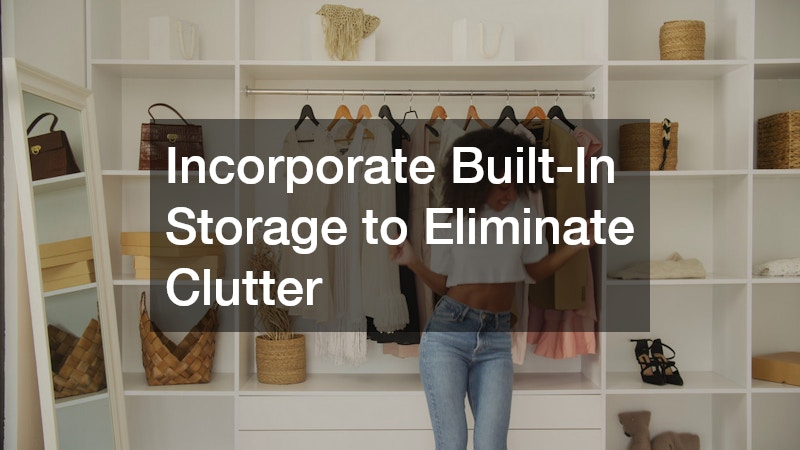
Freestanding furniture has its place, but in smaller homes, it often works against you. It takes up floor space, creates visual clutter, and rarely fits perfectly within a room’s dimensions.
Built-in storage, on the other hand, is designed specifically for your space.
Many homeowners turn to local architects to plan custom solutions that blend seamlessly into walls, under stairs, or along unused corners. These designs don’t just store items—they become part of the home’s structure.
Consider options like:
- Floor-to-ceiling shelving units
- Hidden cabinets behind paneling
- Window-seat storage compartments
The advantage is twofold: you gain storage without sacrificing space, and the room feels more cohesive because everything is integrated.
One homeowner transformed a narrow hallway by adding recessed shelving between wall studs. What was once dead space became a practical storage area without altering the room’s footprint.
Built-ins aren’t just about organization—they’re about making your home feel intentional and uncluttered.
Upgrade Safety Systems Without Sacrificing Space
Safety features are essential, but they don’t have to dominate your space.
Modern fire sprinkler systems, for example, are far more compact and discreet than older models. They can be integrated into ceilings or walls in a way that’s almost invisible, preserving both aesthetics and functionality.
This is especially important in smaller homes, where every visible element contributes to how spacious—or cramped—a room feels.
Beyond installation, consider how safety systems interact with your layout. Clear pathways, unobstructed exits, and thoughtful placement all contribute to a safer, more efficient environment.
It’s easy to think of safety upgrades as purely functional, but when done right, they support both peace of mind and good design.
Make Roofing Choices That Support Interior Efficiency
Your roof does more than protect your home—it plays a major role in how your interior space functions.
Working with experienced roofing contractors can help you explore options that improve insulation, natural lighting, and even storage potential.
For example, adding a skylight can reduce reliance on artificial lighting while making a room feel larger and more open. Improved insulation can stabilize indoor temperatures, reducing the need for additional equipment that takes up space.
Attics are another often-overlooked opportunity. With the right roofing design, they can be transformed into usable storage or even living space.
These upgrades don’t just enhance your home structurally—they directly impact how efficiently your interior space is used.
Combine Indoor and Outdoor Storage for Better Organization
One of the most effective ways to reduce clutter inside is to shift certain storage needs outside.
Collaborating with deck installers and a hardscaping service can create discreet, weatherproof storage solutions that blend into your outdoor environment.
Think beyond traditional sheds. Built-in deck compartments, hidden bench storage, and integrated garden boxes can all serve practical purposes without disrupting the look of your yard.
This approach works particularly well for:
- Seasonal decorations
- Outdoor equipment
- Hobby or sports gear
By distributing storage across both indoor and outdoor areas, you reduce pressure on your interior space while keeping everything accessible.
It’s a simple shift in strategy that can have a big impact on daily organization.
Design Small Spaces That Feel Larger and More Livable
Sometimes, the most powerful upgrades aren’t structural—they’re perceptual.
The way a space feels can be just as important as its actual size. Strategic design choices can make even the smallest areas feel open, flexible, and comfortable.
For instance, adding a compact custom metal building as a backyard studio or workspace can create the sense of expanded living without altering your home’s footprint. Pairing that with a thoughtfully designed outdoor area by a patio builder can blur the line between inside and outside.
Inside the home, small adjustments make a big difference:
- Using mirrors to reflect light
- Choosing lighter color palettes
- Incorporating multi-functional furniture
These changes don’t require major investment, but they dramatically improve how a space is experienced.
Ultimately, space-saving isn’t just about fitting more into your home—it’s about creating an environment that supports how you live.
Even the most well-designed home can start to feel cramped if daily habits don’t support the systems you’ve put in place. Space-saving upgrades work best when they’re paired with simple routines that keep things from piling up again.
Think of your home as a living system rather than a finished project. The goal isn’t just to organize once—it’s to maintain a flow that prevents clutter from returning.
One effective approach is to build small reset moments into your day. These don’t need to be time-consuming. In fact, consistency matters far more than effort.
For example:
- A five-minute evening reset to return items to their designated spots
- Clearing countertops before going to bed to start fresh in the morning
- Keeping a small “catch-all” bin for items that need to be relocated later
Another helpful mindset shift is adopting a “one in, one out” rule. When you bring something new into your home, consider what can be removed or relocated. This keeps your space balanced without requiring major cleanouts.
It’s also worth paying attention to friction points—those small moments where your space makes life harder instead of easier. Maybe it’s a crowded entryway that slows you down when you leave the house, or a drawer that’s always overstuffed. These are signals that a system needs adjusting.
The most successful space-saving homes aren’t just well-designed—they’re well-maintained through intentional, realistic habits. Over time, these small actions make your home feel lighter, more functional, and easier to enjoy every day.
Improving your home doesn’t always require more square footage. In many cases, the biggest gains come from using your existing space more thoughtfully.
By focusing on functionality, flexibility, and intentional design, you can create a home that feels more organized, efficient, and enjoyable to live in. Small changes—when done right—can have a lasting impact on your daily routine.
The goal isn’t perfection. It’s progress toward a space that works better for you.