
The spaces we inhabit have a profound, quiet influence over our daily psychological state. When you walk through your front door, your environment issues an immediate emotional cue. It either tells your nervous system to relax, or it bombards you with visual clutter and the nagging feeling of an unfinished to-do list. Far too often, homeowners fall into the trap of designing for the next buyer, or worse, replicating a sterile, mass-produced aesthetic found on social media feeds. The result is a home that looks like a staged showroom but feels entirely devoid of the occupant’s soul.
True personalization is about shifting your mindset away from rigid, passing trends and moving toward an environment that reflects your personal design DNA. It is a balancing act between architectural form, functional longevity, and emotional resonance. Creating a home that feels uniquely yours requires looking past standard layouts and understanding how colors, textures, structural changes, and light interact within a space.
Curating a Cohesive Color Story

To avoid a disjointed interior, implement the classic interior design rule of 60-30-10, adapted for your personal style. Sixty percent of your space—typically the walls and dominant large furnishings—should represent your primary grounding tone. Thirty percent introduces a secondary color through textiles, accent furniture, or distinct focal walls, providing essential depth. The final ten percent belongs to your accent tones, found in artwork, small decor items, and lighting fixtures, which can be easily swapped as your tastes evolve.
When choosing a primary palette, consider how natural light moves through your home. North-facing rooms inherit a cool, bluish cast, meaning they benefit immensely from warmer undertones. Conversely, south-facing spaces are flooded with warm, golden light all day, giving you the freedom to experiment with crisper whites, deep charcoals, or cool blues without the risk of the space feeling clinical.
Upgrading Architectural Details for Character
Plain, flat drywall is the hallmark of modern suburban construction, but it offers very little architectural interest. Introducing custom millwork is one of the most effective ways to infuse a historical or bespoke character into a cookie-cutter layout.
- Board and Batten: Excellent for entryways and dining rooms, adding a tailored, rhythmic geometry to the lower half or full height of a wall.
- Wainscoting and Picture Frame Molding: Ideal for formal living areas or master bedrooms, lending an elegant, classical symmetry that frames artwork beautifully.
- Accent Ceilings: Often called the fifth wall, applying a soft contrast color, tongue-and-groove wood paneling, or delicate plaster work overhead can instantly alter the perceived height and coziness of a room.
While simpler molding projects can be tackled over a weekend, complex color changes or extensive millwork coverage require flawless execution to look high-end. For crisp lines, immaculate masking, and a durable finish on intricate woodwork, hiring professional interior painting services can elevate the final result from a well-intentioned weekend project to a seamless, showroom-quality backdrop.
Unlocking Forgotten Square Footage
A personalized home functions perfectly around your specific hobbies and daily rituals. If you have an underutilized attic, a deep storage closet, or an open area beneath a staircase, consider converting it into a dedicated zone, such as a hidden reading nook, a built-in pocket bar, or a tailored homework station for children.
For those needing a more substantial expansion of functional space, looking downward is often the most intelligent solution. A comprehensive basement finishing project allows you to construct custom zones that might not fit within the main floor footprint. Whether you envision a climate-controlled wine cellar, a sound-insulated media room, or a dedicated home gym, transforming a damp, unfinished lower level into a vibrant, dry living space adds incredible functional personalization to your lifestyle.
Selecting Flooring Material That Matches Your Lifestyle

The choice between various flooring materials should be dictated by a combination of your aesthetic goals and your household’s daily traffic. Solid wood remains the gold standard for luxury and longevity, offering natural grain patterns that add organic warmth to modern and traditional spaces alike. Engineered hardwoods offer identical visual appeal with the added benefit of dimensional stability in environments prone to temperature fluctuations.
Because flooring installation requires precise subfloor preparation, flawless transitions around door jambs, and meticulous layout planning to avoid awkward gaps, cutting corners here can permanently diminish your home’s aesthetic value. Partnering with experienced hardwood flooring contractors ensures that the wood is correctly acclimated to your home’s humidity levels, properly fastened, and finished with top-tier protectants that preserve the deep, natural beauty of the wood planks for decades.
Layering Textiles for Visual Warmth and Depth
Once your hard flooring is established, textiles introduce soft lines and acoustic dampening. Area rugs serve as visual anchors that define specific functional zones within an open-concept layout. Without them, furniture can look like it is floating aimlessly in a vast room.
- Scale Matters: Ensure your rug is large enough that at least the front legs of all primary seating elements sit comfortably on top of it. A small rug shrinks the perception of the room.
- Texture Blending: Mix flat-woven rugs with plush wool or high-pile alternatives to create a tactile landscape that feels rich and comfortable underfoot.
- Maintenance Realities: High-traffic areas like entryways and living rooms demand resilient fibers. While regular vacuuming handles surface dust, deeply embedded oils, pet dander, and accidental spills require periodic deeper care. Investing in professional carpet cleaning once or twice a year rejuvenates the fibers, lifts compressed pile, and keeps the original colors looking bright and intentional rather than faded and worn.
Designing an Architectural Kitchen Focal Point
Standard builder-grade kitchens rely on predictable rows of uniform upper and lower cabinets. Breaking away from this layout allows you to inject genuine architectural interest. Consider replacing a section of heavy upper cabinets with thick, floating solid-wood shelves to showcase curated ceramics, or design an expansive, furniture-style island that acts as a central gathering point.
Achieving a highly customized kitchen requires an understanding of structural engineering, plumbing rerouting, and custom cabinetry design. Working alongside a dedicated kitchen remodeling company allows you to reconfigure your workspace entirely. They can help implement specific lifestyle solutions, such as hidden appliance garages to keep counter clutter at bay, integrated recycling centers, or bespoke pantry pull-outs tailored to your specific cooking habits.
Choosing Statement Surfaces That Tell a Story
Countertops represent a massive visual plane in the kitchen, making them the perfect medium for a strong style statement. The material you choose should reflect both how you cook and the tactile experience you want to create.
- Natural Stone: Materials like marble or soapstone develop a rich patina over time, telling a story of meals cooked and gatherings hosted, though they require regular sealing.
- Engineered Quartz: Ideal for minimal maintenance, offering clean, crisp backgrounds with dramatic, non-repeating veining that mimics high-end quartzite.
- Butcher Block and Concrete: Perfect for adding industrial grit or rustic warmth as an accent surface, particularly on a central island.
To ensure these heavy, costly materials are perfectly integrated with your cabinetry and cut with absolute precision around your sinks and cooktops, sourcing your materials through a provider of custom countertops is essential. This ensures that unique edge profiles, waterfall ends, and book-matched seam placements are handled by artisans who understand how to maximize the natural beauty of the material slab.
Reimagining Layouts for Daily Wellness

Personalizing a bathroom means analyzing your morning and evening routines to eliminate friction points. For some, this means removing an underutilized tub to build an expansive, walk-in wet room. For others, it involves integrating dual vanities with dedicated storage to ensure a peaceful shared space.
A successful bathroom remodeling effort focuses on layering various types of illumination to create a spa-like atmosphere. Combine bright, shadow-free task lighting around the vanity mirrors with soft, dimmable ambient lighting over the shower or tub area. Incorporating natural elements, such as unlacquered brass fixtures that age beautifully, organic stone tiles, and waterproof plaster finishes, shifts the environment away from cold utility toward warm luxury.
Elevating the Daily Cleansing Experience
The shower enclosure itself is the architectural anchor of the modern bathroom. Traditional framed shower doors or heavy fabric curtains can chop up a small room, blocking light and making an otherwise beautiful tile job feel claustrophobic.
- Maximizing Visual Depth: Frameless glass enclosures allow the eye to travel straight through to the back wall, immediately making a compact bathroom feel twice as large.
- Showcasing Custom Tilework: If you have invested in beautiful herringbone tiling, vertical stacked subway stone, or a dramatic marble mosaic, clear glass ensures that craftsmanship remains on full display.
- Ease of Maintenance: Modern glass coatings resist water spots and soap scum, ensuring your clean aesthetic requires minimal daily upkeep.
When configuring these enclosures, utilizing specialized professionals for custom shower doors allows you to design specialized layouts, such as heavy-gauge, floor-to-ceiling glass panels, unique matte-black or brushed-bronze hardware configurations, and neo-angle designs that maximize floor space while maintaining a clean, high-end look.
Controlling Light and Framing Your Views
Windows are the eyes of your home, yet window dressings are frequently treated as an afterthought. Properly designed window treatments do far more than provide privacy; they correct architectural flaws and manipulate the scale of a room. Hanging drapery rods close to the ceiling line rather than right above the window frame draws the eye upward, creating the illusion of soaring ceiling heights. Extending the rod wider than the actual window frame allows the fabric to stack completely against the wall when open, maximizing natural light entry and making the window appear significantly grander.
Navigating the world of roman shades, motorized woven woods, and custom drapery pleats can be incredibly daunting. Partnering with professional window treatment services ensures your textiles are perfectly measured, lined with the correct light-filtering or blackout backings, and installed with heavy-duty hardware that functions effortlessly day after day. This attention to detail prevents your drapery from dragging unevenly or looking skimpy, ensuring a tailored, polished finish.
Curating Meaningful Accents Over Mass-Produced Decor
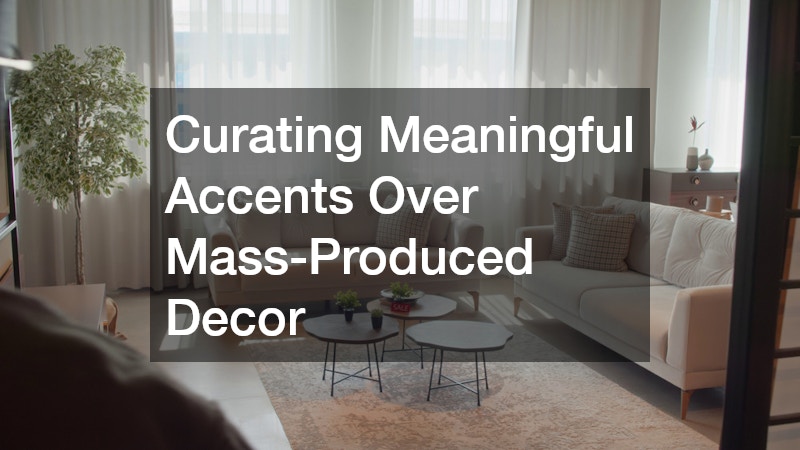
The ultimate stage of personalizing your home is the curation of decorative objects. A common mistake is going on a single shopping spree to completely fill empty shelves. This approach results in a home that looks impersonal and temporary. Instead, aim for a slow-curated environment where every object carries meaning, history, or distinct artistic merit.
- Mix High and Low: Pair an expensive, designer sofa with a weathered vintage coffee table found at a local flea market. The contrast creates visual tension and personality.
- Integrate Living Elements: Plants bring organic form, vibrant color, and movement into static rooms. Use tall fiddle-leaf figs to fill empty corners or delicate trailing pothos to soften rigid bookshelves.
- Incorporate Personal History: Frame original travel photography, display your favorite hardcover book collections, or showcase an antique heirloom. These pieces serve as immediate conversation starters and deeply personal touchstones.
When sourcing new items to tie your rooms together, combine independent artisan boutiques, antique galleries, and reputable home decor stores. This varied sourcing strategy gives you access to high-quality staple items—such as minimalist table lamps, sculptural vases, or plush throw blankets—while allowing your unique, found objects to take center stage as the stars of your home’s interior aesthetic.
Personalizing your interior design is an ongoing journey of curation rather than a finite race with a rigid end point. It requires patience to allow your home to evolve alongside your changing lifestyle, travel experiences, and personal tastes. By focusing first on a strong color narrative and sound structural upgrades, grounding your spaces with durable, high-quality flooring, and investing in custom finishes for your kitchen and bathrooms, you create a timeless canvas that supports your daily life.
The ultimate test of a well-designed home is not found in the approval of others or its resemblance to a magazine cover. Instead, it is found in how deeply the space resonates with you. When your interior is carefully tailored to your unique functional needs and aesthetic preferences, it ceases to be just a building made of drywall and timber. It becomes a sanctuary that nurtures your well-being, inspires your creativity, and welcomes you back with genuine warmth every single day.